

David Hall’s response to my sendoff for Norman Mailer put me in mind of last year’s New Year’s Resolution: to read a book, play, or entire literary journal issue a month. My goal was to go back to the modern and contemporary classics and pulitizer prize winners–just because that’s a list I don’t have to generate myself; also because I remember be so impressed once when a friend said she’d read every Pulitzer prize-winning book in the literary categories. I though, wow! (Then, of course, went home and cried myself to sleep over my own ineptitude. Shouldn’t all writers read read read? Duh. Yeah.) I started off well, and then, well, you know the rest. Good intentions, no follow-through. Sometimes I’ll read two or three books in a burst, and then drown in work-related stuffs.
My last two summers as an instructor for the Kenyon Review Young Writers program, I read 8 or so books each six weeks–more than I’d read the entire year. This started because my students and I were talking about stories one day, and the students were naming all of their favorite stories, one of which was Catcher in the Rye. I remembered reading the book in high school, but remembered the mythology of Holden more than the actual book. In fact, I didn’t even remember liking it all that much. All of a sudden, I had to have a copy–had to read it again. I headed to the greatest bookstore in the world and picked up a paperback for $6.99, huddled into an Adirondack chair, and spent the entire afternoon falling in love with the book. That led to my next read the next day, Camus’ The Stranger. All I remembered about this book in high school was that our English teacher thought it was the greatest. I was unmoved. And yet, rereading it that summer in Gambier, I found more meaning in my own life despite Camus’ insistence that life is ultimately meaningless. This led me to The Bell Jar by Sylvia Plath, because I was in love with a particular description:
“I saw my life branching out before me like the green fig tree in the story. From the tip of every branch, like a fat purple fig, a wonderful future beckoned and winked.”


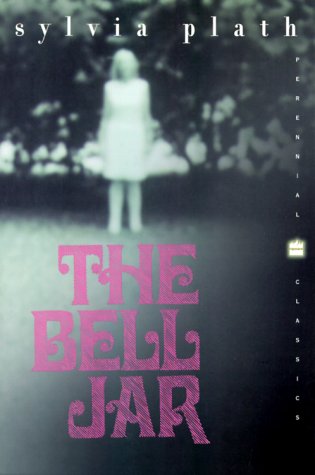
It goes on, with all of the fruit–her choices in life–rotting and falling to the ground because she was unable to choose. I had been trying to explain this passage to one of my fellow instructors, so we went to the bookstore in search of it. My entire life I’ve felt so connected to this description–wanting to do so much that I don’t know where to start sometimes. I ended up rereading this book again the following summer at Kenyon, and then passing on the copy to a friend who had never read it herself, begging her to pass it on after she was done. We had a particularly passionate discussion over cheap beer one night about Plath and Hughes–her journals and his rumored omissions in the published versions. We never got to finish that discussion. After Plath this past summer I tackled Ulysses in a single weekend, fondly remembering a Joyce seminar I took at SF State in which a nun from Ireland was enrolled. She had great insight into that book. I also read the books of all of the 2007 Kenyon Review Writers Workshop visiting writers the following weekend: Birds of Fall, Five Skies, Departure and The Metal Shredders. I wanted to talk to everyone about what I was reading–the beautiful opening passage of Kessler’s book and connections I saw between Carlson’s main characters and the characters in Shredders.
That’s what reading good (and bad) books should do–start conversations. These conversations can be inside our heads, with us and a journal, or, preferably, between ourselves and another human being! I don’t know about the rest of you, but when I return from Wonderland back into my own job and personal writing, I find myself buying book after book, and never finishing them, or finishing them at a painfully slow rate; or reading books for class-planning but not for personal pleasure–until summer.


I suppose I could just turn off the television more often, squeeze in reading time on a daily basis. I think, however, the deadline of a book club conversation, and the knowledge that someone else will be there to chat with me, is a great motivator. So, friends, I offer the Kenyon Review Blog Book Club. Shall we begin with Mr. Hall’s desire to finally read Mailer? The Executioner’s Song is over 1,000 pages; that may be too daunting for our first time out–so perhaps The Castle in the Forest is where we should begin. Your due date: December 18. Just in time to end the year on a high note of reading! Check back here to contribute your findings as you read!