

About the Nonfiction Contest
Submissions for the Kenyon Review Nonfiction Contest are accepted electronically every year from November 15 through December 31, 2025.
The Kenyon Review publishes the winning essay in print (with corresponding contributor payment), and the author is awarded a full scholarship to attend the Kenyon Review Writers Workshops.
- Submit via our Submittable portal, starting November 15. We cannot accept paper submissions.
- Writers must not have published a book of creative nonfiction at the time of submission. (We define a “published book of creative nonfiction” as a memoir, book of essays, or other creative nonfiction collection written by you and published by someone other than you in print, on the web, or in ebook format.)
- Submissions must be no more than 4,000 words in length.
- Please submit no more than once per year.
- Please do not simultaneously submit your contest entry to another magazine or contest.
- Please do not submit work that has been previously published.
- Before you submit, please remove your name and any other identifying information from your manuscript.
- The Submittable portal will remain active between November 15 and December 31, 2025.
- The entry fee for the Nonfiction Contest is just $24, collected at the time of submission. All entrants are invited to claim a complimentary half-year Print plus Digital subscription to The Kenyon Review (for domestic addresses) or a half-year Digital-only subscription (for international addresses) through. Current subscribers will receive a two-issue extension on their current subscription. As always, we will open in the fall for regular submissions, which we read at no cost to writers. You will receive information on claiming this subscription upon submitting.
Winners will be announced in the late spring. You will receive an email notifying you of any decisions regarding your work.
2025 Nonfiction Contest Judge: Kiese Laymon
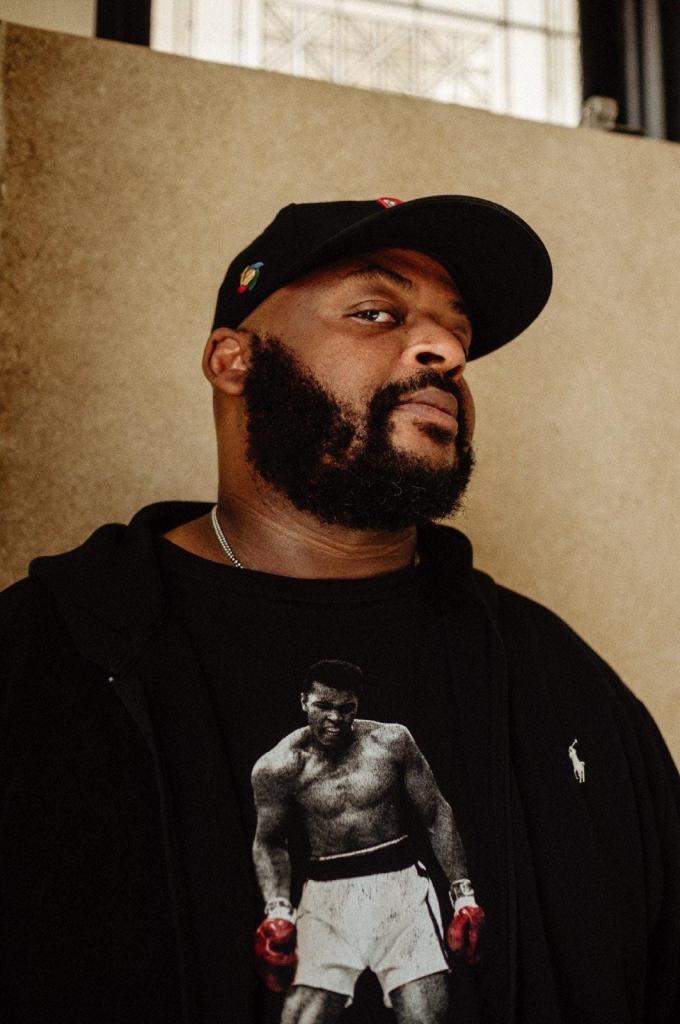
Kiese Laymon is a Black southern writer from Jackson, Mississippi. Laymon is the Libbie Shearn Moody Professor of English and Creative Writing at Rice University. Laymon is the author of Long Division, which won the 2022 NAACP Image Award for fiction, and the essay collection, How to Slowly Kill Yourself and Others in America, named a notable book of 2021 by the New York Times critics. Laymon’s bestselling memoir, Heavy: An American Memoir, won the Andrew Carnegie Medal for Excellence in Nonfiction, the Christopher Isherwood Prize for Autobiographical Prose, the Barnes and Noble Discovery Award, the Austen Riggs Erikson Prize for Excellence in Mental Health Media, and was named one of the 50 Best Memoirs of the Past 50 Years by The New York Times. The audiobook, read by the author, was named the Audible 2018 Audiobook of the Year. Laymon is the recipient of 2020-2021 Radcliffe Fellowship at Harvard. Laymon is at work on the books, Good God, and City Summer, Country Summer, and a number of other film and television projects. He is the founder of The Catherine Coleman Literary Arts and Justice Initiative, a program based out of the Margaret Walker Center at Jackson State University, aimed at aiding young people in Jackson get more comfortable reading, writing, revising and sharing on their on their own terms, in their own communities. He is the co-host of Reckon True Stories with Deesha Philyaw. Kiese Laymon was awarded a MacArthur Fellowship in 2022.
Thanks for your interest in The Kenyon Review!
Announcing the 2025 Results
The Kenyon Review Nonfiction Contest received almost two hundred submissions this year, and it thrills us to share the results. The winner is Jessie Cato (she/her). Her essay “In the Mirror” will appear in an upcoming print issue of The Kenyon Review, and she has received a full scholarship to the Kenyon Review Summer Residential Writing Workshops. Judge Lucy Ives writes, “‘In the Mirror’ is a brief and devastating portrait of a father. Entirely unsentimental, the essay is an act of witnessing and brave mourning. It asks us to reflect on a singular human mystery, one that many of us are encountering right now: How do we, the children of parents who have failed to love themselves, begin to live?”
Ives also selected two runners-up: Davina Sambath (she/her) and Gavin Ockert (he/him). She lauds Sambath’s “Trying to Explain Genocide to a Six-Year-Old” for “describ[ing] this painful moment from the point of view of a parent, who sensitively and brilliantly acknowledges their inability to explain, weaving a narrative of dismay and healing.” She describes Ockert’s “Check Out” as “funny and tragic; it’s a feat of storytelling and an unflinching look at how bare life has become in the US.”
Past Winners
2025 Winners
First Prize: Jessie Cato, “Through the Mirror”
Runner-up: Davina Sambath, “Trying to Explain Genocide to a Six-Year-Old”
Runner-up: Gavin Ockert, “Check Out”
2024 Winners
First Prize: Jessica Petrow-Cohen, “On Molting”
Runner-up: Cynthia Nwakudu, “In Re-Memoriam”
Runner-up: Laura Kraftowitz, “Abu Jameel’s House: Portraits of Gaza”
Honorable Mention: Jessica Stiles, “One More Handful of Ashes”
2023 Winners
First Prize: Carrie Cogan, “Highest of the High on a Low Red Hill”
Runner-up: Mikaela Dunitz, “The Men”
Runner-up: Katie Winkelstein-Duveneck, “Poor Historian”
2022 Winners
Winner: Karen Kao, “Fish Tales”
Honorable Mention: Leah Alter, “Roses”
Honorable Mention: Sam Berman, “When You Jump Off The Brooklyn Bridge”
2021 Winners
First Prize: Brigitte Leschhorn Arrocha, “And We Inherit Everything”
Runner-up: Christian Butterfield, “Blue Whale Challenge”
Runner-up: dm armstrong, “Translating”
Honorable Mention: Sandrine Tunezerwe, “Ndagukunda” and Madeline Horan, “The Quiet Limit of the World”
2020 Winners
First Prize: Miriam Grossman, “2004”
Runner-up: Mary O. Parker, “Currents and Eddies”
Runner-up: Stella Li, “Mouthwater”
2019 Winners
First Prize: Anna Hartford, “Hello Fridge”
Runner-up: KT Sparks, “Saving Luna”
Runner-up: Benjamin Garcia, “The Great Glass Closet”
Honorable Mention: My Tran, “The Black Cake”; and Dasom Yang, “Memory Collage 1”