Nabokov wrote The Real Life of Sebastian Knight under unusual circumstances. In a 1941 letter to Edmund Wilson (penned long before their famous feud), he tells his new friend, “I am very happy that you liked that little book. As I think I told you, I wrote it five years ago, in Paris, on the implement called bidet as a writing desk — because we lived in one room and I had to use our small bathroom as a study.”


Where, then, are today’s novels and poems and essays being written? In Japan, a number of subway-riding would-be novelists are attempting to text themselves onto the bestseller lists. The Vancouver International Writers & Readers Festival has a nice spread on British Columbian writers’ rooms. The Guardian has an even more exhaustive series that describes the writing spaces of over 100 authors, most of them Brits. Favorites from the list include Alain de Botton, Roald Dahl, and Jane Austen:
Having no room of her own, [Austen] established herself near the little-used front door, and here “she wrote upon small sheets of paper which could easily be put away, or covered with a piece of blotting paper.” A creaking swing door gave her warning when anyone was coming, and she refused to have the creak remedied.
As someone who writes mostly in coffee shops (even when blessed with a home specifically designated as a writer’s residence), I envy those who can stay in their bedrooms or offices and ignore the distractions of the phone and the fridge. A few days ago I took a tour of Edith Wharton‘s stately mansion in Lenox, Massachusetts, a residence that Wharton designed and built for herself and her husband Teddy in 1902 and that she christened “The Mount.” The house is exceedingly lovely, with terrazzo floors, an oak-paneled library, and glass-cased (and exuberant!) correspondence:


But what interested me most about the tour was the description of Wharton’s writing schedule. She was forty years old when she arrived at The Mount — old enough, you might say, to have figured out what she required — and she wrote every morning, from 6 a.m. to 11 a.m. The first woman to win the Pulitzer Prize for Fiction, she completed over forty books in forty years, including The House of Mirth and Ethan Frome during her ten-year stay in Lenox. She had all sorts of advantages: servants (whom she reportedly treated with kindness); fancy clothes (according to our tour guide, she was “a real clothes horse” and often changed outfits up to five times a day); and electricity (it helped that George Westinghouse was her neighbor). But others had similar advantages; Wharton just worked harder than they did.

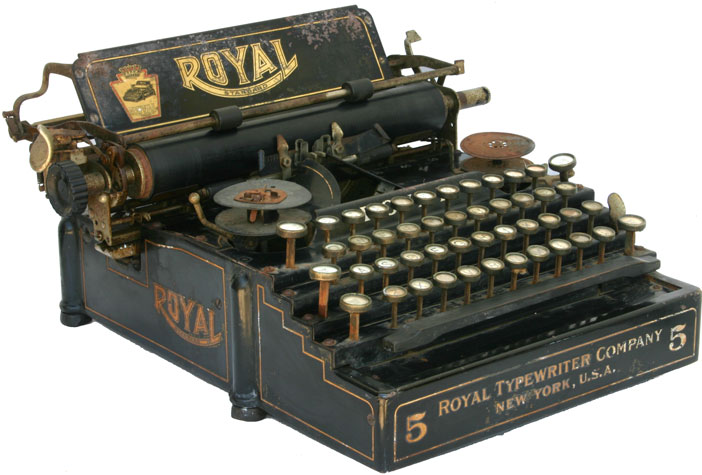
In his book Outliers, Malcolm Gladwell posits the 10,000-hour rule: To excel in any field (hockey, music, computer science, writing), one has to put in at least 10,000 practice hours. The math is easy: Write five hours a day, as Wharton did, and you’ll reach 10,000 hours in five and a half years. But back to our original question: Where does all this writing take place? Philip Roth writes in a small studio located 60 yards from his Connecticut farmhouse. Kent Haruf writes in the coal room of the basement of his Southern Illinois home. (Furthermore, he pulls a stocking cap down over his eyes and types, blindly, on a Royal manual typewriter.) Wharton had her preferred spot, as well:



Once writers find spaces that work for them, the next question is often how to fill those spaces. A dear friend once gave me a custom-made Tony Kushner bobblehead, a writing spur I carry with me from residence to residence. (Here’s Kushner‘s motto, borrowed from Glenway Wescott: “A day’s work every day now. Now, now, now!”) Haruf also keeps totems near his writing desk: the skull of a Hereford bull, a bag of red sand from the stage of the new Globe Theater, an obsidian arrowhead. In the Guardian series, Andrew Motion describes his writing space in terms of the mementos with which he surrounds himself:


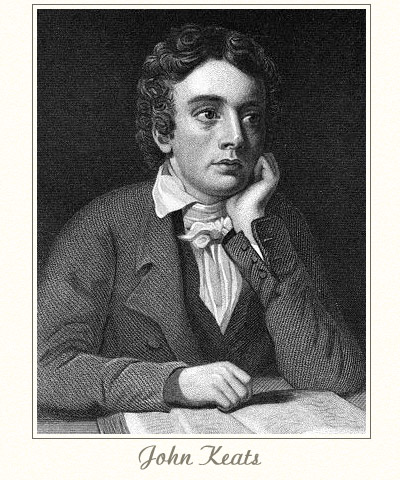
These days I have less time than I would like to spend writing, and the sense of my study being a sanctuary has grown accordingly. Although it has a view down the garden, I almost never look up and out, but down or round — at the spines and knick-knacks which are my personal history-in-objects: the portrait reproductions of favorite writers (here you can see the Rossetti family, the young Tennyson, Edward Thomas and Keats); a bay leaf taken from the grave of Ezra Pound; and — most treasured of all my books — the 13-volume OED which used to belong to Philip Larkin, and before him his father, which was given to me by Larkin’s companion Monica Jones after his death in 1985. Every time I peer into it, which is several times a day, I think: “All the words I’ll ever need are here; the only thing I have to do is get them out in the right order.”