

A few days ago I listened to Dean Young give a reading at the University of Michigan’s Helmut Stern Auditorium. Dressed in drainpipe jeans and a Western-style plaid shirt, Young began the event with a simple invitation: “Please feel free to talk quietly among yourselves.” After reading two poems, he asked, “Any questions so far?” (Surprisingly, and sort of wonderfully, someone raised a hand.) After the fifth poem, an audience member headed toward the exit — and Young, not unkindly, called her out. In these ways and others, the poet subtly undermined the conventions of the reading. As he remarked near the end of the evening, “One of the weird things about a poetry reading is that one can’t help feeling that one has been talking for a long time in a social situation.”
People were also laughing, at least at times, in a poetry situation. And that’s weird, too — though I wish it weren’t. A handful of years ago Young published an essay in American Poet called “Sincere Irreverence.” Here’s the opening, a midpoint moment, and the last line, from my much-photocopied version:
I have been asked by the Academy of American Poets to write 750-1000 words on irreverence. See what I mean? Irreverence is when something is where it shouldn’t be.
The proper use of a hammer is to stand fifteen feet away and throw it at the nail.
Finally, you can only trust yourself and you can’t trust that nitwit either.
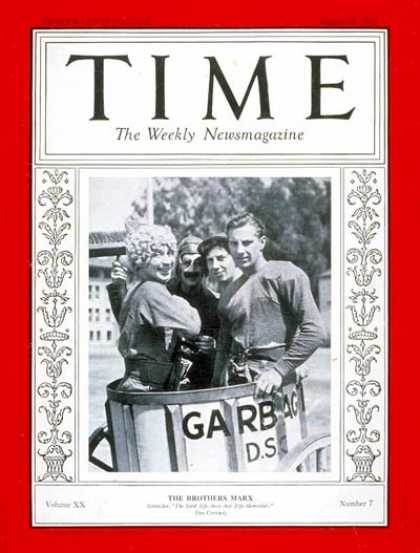
We often laugh at incongruence, at finding a thing “where it shouldn’t be.” It’s a bedrock principle of comedy. Young’s best poems create a zone in which almost anything is welcome — the more surprising, the more disparate, the better. “This Living Hand [excerpt]” bypasses Keats in favor of the Marx Brothers: Karl and Zeppo. Its ending — “But where were we? . . .” — is the unvoiced question in most of the poet’s work. The usual answer: skidding from one associative leap to the next.

Like any comic principle, incongruity can be taken too far. If I open my fridge expecting to find a gallon of milk and discover, instead, a bowling ball, I’m likely to laugh. If I open my fridge and discover a severed clown’s head — well, you see what I mean.
This morning, flipping through a several-weeks-old New Yorker, I happened upon Stephen Dunn’s “If a Clown.” It begins,
If a clown came out of the woods,
a standard-looking clown with oversized
polka-dot clothes, floppy shoes,
a red, bulbous nose, and you saw him
on the edge of your property,
there’d be nothing funny about that,
would there?
Context, of course, is important. “What could be sadder,” Dunn writes, “. . . than a clown in need of context?” And yet it’s sometimes a great advantage to seem out of context, to be the incongruous element in a world of sameness. I once spent a sleepless night in a New Orleans bar with a heartbroken, too-talkative clown. It wasn’t a funny night, but I sure remember it. What I’m trying to suggest, in a roundabout way, is that a poet like Dean Young (or, say, a Greg Williamson, a Heather McHugh, an X. J. Kennedy) has a tremendous advantage when giving a poetry reading. People expect readings — at least academically sponsored ones — to be extra-serious affairs. So laughter becomes a secret weapon, and an especially useful one, in a place like the Helmut Stern Auditorium.
From a version of Beowulf: “Beside his shield, ‘neath helmet stern, he rose and took his sword.”