

As part of my ongoing attempt to turn back the calendar to 1985, I recently bought a turntable. That means I can finally listen to records that I’ve lugged all over the country — from Baltimore to Arkansas to Massachusetts to Seattle to Ann Arbor — but haven’t been able to play in ages. What would it feel like, I wondered, to again hold an album sleeve? To blow the dust from a needle? To rise every twenty minutes to flip a record to Side B? And would I love the same LPs I used to love?

Something related, and which I’ve been carrying around for a much shorter period of time: Verlyn Klinkenborg’s Times article titled “Some Thoughts on the Pleasures of Being a Re-Reader.” The piece was published in May and begins, “I’ve always admired my friends who are wide readers.” I thought of the piece a few days ago when, at a party, some new friends started playing the “What Book Are You Most Embarrassed About Not Having Read?” game. (I “won,” I think, with Ulysses.) Admiration for his friends aside, Klinkenborg writes that he finds re-reading, rather than reading widely, the more rewarding path:

The work I chose in adulthood — to study literature — required the childish pleasure of re-reading. When I was in graduate school, once through Pope’s Dunciad or Berryman’s The Dream Songs was not going to cut it. A grasp of the poem was presumed to lie on the far side of many re-readings, none of which were really repetitions.
The Dream Songs changed my life. But so did the Velvet Underground’s 1969. I’m listening to it now: “Pale Blue Eyes,” “I’ll Be Your Mirror,” the opening patter about the Cowboys and the Eagles. I never exactly wanted to be John Berryman — all that pathos, plus the wave from the bridge — but I absolutely wanted to be Lou Reed. I can remember the first time I heard his voice: I was eighteen, and the newly released VU was playing in my friend Mitra’s living room. “Well I got a foggy notion, do it again / Over by the corner, do it again / I got my calamine lotion baby, do it again / I got a foggy notion, do it again.” And when he ad libbed, at the end of “Temptation Inside Your Heart,” “Lock the door” — I was sort of in love.


I loved Lou Reed at eighteen and twenty-two and twenty-six . . . and then I sort of stopped thinking about him. That’s around the time the albums got boxed away. About a month ago I read All Yesterday’s Parties: The Velvet Underground in Print, 1966-1971, edited by Clinton Heylin. I wondered if I’d still feel any of the same excitement I used to feel when thinking about the Velvets, and Warhol’s Factory, and the various Superstars and psychodramas. The answer: a bit. The following passages caught my attention:
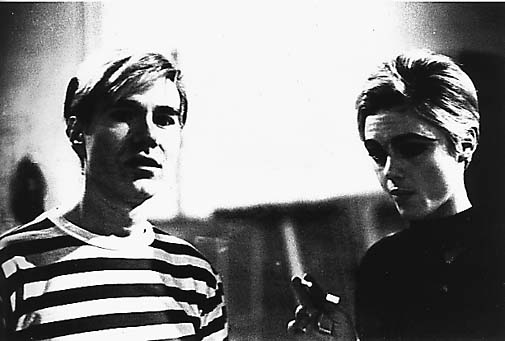
The Velvets, with Nico and Andy and all that light, began to construct a scene around the title “Exploding Plastic Inevitable.” They’ve done quite a bit of traveling since, and their reviews reflect the ambivalence a quiet evening at the Balloon Farm can produce. Said the Chicago Daily News: “The flowers of evil are in full bloom.” Los Angeles magazine compared the sound to “Berlin in the decadent thirties.” Even Cher (of Sonny and Cher) was heard to mutter: “It will replace nothing except suicide.” – from Richard Goldstein’s “A Quiet Night at the Balloon Farm,” New York, October 1966
Or “Sweet Jane,” possibly the Velvets finest song since the cataclysmic “Sister Ray”: “Ridin’ in Stutz-Bearcat, Jim,” says Reed in the midst of a vocal performance that would put Mick Jagger to shame, “You know those were different times / The poets they studied rules of verse / And the ladies, they rolled their eyes.” You can talk all you want about your rock poets, but I can’t think of many who could come close to matching that.” – from Lenny Kaye’s “Review of Loaded,” Rolling Stone, December 24, 1970
The Velvets’ old professor Delmore Schwartz once wrote, “a cup of coffee can destroy your sadness,” and the Velvet Underground were New York’s cup of coffee throughout the summer smog.” – from Danny Goldberg’s “Beyond Warhol,” Circus, February 1971
This one song [“Train Round the Bend”] is one of the most definitively (which includes unpretentiously) Amerikan pieces of music heard since “Mystery Train” or Roy Acuff’s “Night Train to Memphis,” both of which it’s intrinsically related to not only as new ragweed-continent Train litercheer but also as musical construction. You bet it’s an obvious song; why didn’t you think of it? Just like you should have thought of “Not Fade Away” and “Lay Lady Lay” and lots of other inevitable, indestructible songs that when suddenly they’re there it seems like they always were or shoulda been because they roll off the spool as natural as life itself and where they now set there was before a void which you just never noticed, because if you had, and been a genius-type void-filler like ol’ Louie Reed, why then you woulda had all the glory.” – from Lester Bangs‘ “Dead Lie the Velvets, Underground,” Creem, May 1971


I also recently watched the 2006 documentary The Velvet Underground: Under Review. At the end of the film, Velvets drummer Moe Tucker is asked whether she wishes the band had been more commercially successful. “To be honest,” she answers,

I would rather it be the way it is, than for us to have made ten million dollars and it didn’t matter. Ten million would be real nice, but honestly, I really — it’s great, it’s great to go play somewhere and have an eighteen-year-old say, “Aww, I love your music,” and “You changed my life,” and things like that — it’s, it’s just really, Wow, you know.
That’s me, that eighteen-year-old. And I guess I’m feeling slightly protective of him. I don’t want him revealed as a sucker, or worse. The Velvet Underground experiment is going well: I’m on Side D of 1969, and I’m liking all of it, even the skips. But I’ll never again break open Hermann Hesse’s Narcissus and Goldmund, which I read nearly non-stop during my first week as a college student in Madison, Wisconsin, curled up in a library chair overlooking Lake Mendota. Why wreck that memory? In ABC of Reading, Pound writes, “There is no reason why the same man should like the same books at eighteen and at forty-eight.” I’m afraid — based on no evidence, really — that Narcissus and Goldmund might now strike me as fake-deep. And I don’t want to implicate my younger self (guilty as he surely was) in that fake-deepness.

Yet I continue to re-read, with genuine excitement, Dickinson, Auden, Berryman, Larkin, Didion, and Denis Johnson. And I’m starting to play my old LPs — those vaguely petroleum-smelling analog discs, with a third of a mile of groove per side, that once taught me (no joke) how I felt about the world: Elvis Costello’s King of America, Tom Waits’ Rain Dogs, Lou Reed’s New Sensations.

Klinkenborg ends his essay with two marvelous paragraphs:
The real secret of re-reading is simply this: It is impossible. The characters remain the same, and the words never change, but the reader always does. Pip is always there to be revisited, but you, the reader, are a little like the convict that surprises him in the graveyard — always a stranger.
I look at the books on my library shelves. They certainly seem dormant. But what if the characters are quietly rearranging themselves? What if Emma Woodhouse doesn’t learn from her mistakes? What if Tom Jones descends into a sodden life of poaching and outlawry? What if Eve resists Satan, remembering God’s injunction and Adam’s loving advice? I imagine all the characters bustling to get back into their places as they feel me taking the book down from the shelf. “Hurry,” they’ll say, “he’ll expect to find us exactly where he left us, never mind how much his life has changed in the meantime.”