

Yesterday, crossing campus at lunchtime, I found myself caught in a storm. A few minutes later, drying off at a corner table with a toasted “everything” bagel (“everything,” by the way, is a bit of an over-promise) and a coffee, I started jotting down rain-related notes. For poetry, I thought of Lord Bowen, whose “The Rain It Raineth on the Just” I’ve shared with about 5,000 WITS students:

The rain it raineth on the just
And also on the unjust fella;
But chiefly on the just, because
The unjust steals the just’s umbrella.
For prose, I thought of Alain de Botton‘s wonderful juggling act “Drama or Melodrama,” which appeared in the Spring 1998 issue of The Paris Review and which I’ve shared with, well, not 5,000, but maybe 500 college students. The essay begins with a description of the author being dumped by his girlfriend over breakfast, but it then careens to other points of interest: Saul Bellow, Goethe, singed eyebrows, supermarket snubs. Here’s section ii:


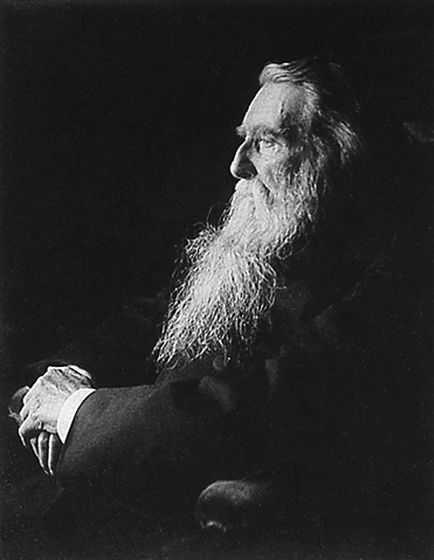
In the summer of 1863, the art critic John Ruskin was on a walk across a valley in the Engadine region of Switzerland when the sky darkened abruptly to an ominous gray-black hue. Having been warned of the severity of summer storms in the valley, Ruskin ran to find shelter in a mountain hut and, from its safety, witnessed a most violent natural commotion breaking overhead.
Rain began lashing down; jagged lines of lightning streaked across the sky, followed by bellowing, tearing sounds, as if the earth were opening up or the planet disintegrating. The windows shook from the sound of thunder, a nearby tree took a direct lightning strike and split down the middle, its insides smoking from the electric charge. A river that ran alongside the house swelled to bursting point, rushing by in a dark brown frenzy, carrying with it a tortured medley of broken branches.
It looked as if the end of the world had come, as if this were the moment of death and of apocalypse. But, of course, it was no such thing; it was merely a passing thunderstorm in a little valley in Switzerland, a storm that would be over in under half an hour, would kill no one, and would disappear from public memory shortly after.
The contrast led Ruskin to the idea that thunderstorms were what death and dramatic events generally should be like but usually were not; the idea that our life’s dramas rarely look as dramatic as they are. Our most cataclysmic moments are typically free of gravitas, of necessary thunder; a person dies, but instead of the sky darkening and lightning striking, the sun continues to shine and the birds to sing. Someone drops overboard to their death and the seagulls circle charmingly and the fish swim on. One person tells another that they no longer want to grow old with them, and the toast pops up.
The latest on Hurricane Earl shows the storm weakening; death and apocalypse are no longer in the forecast. So I thought I’d offer a video of a different Hurricane Earl. [Warning: the audio is NSFW — unless your workplace is a theater, and you’re staging a Mamet play.]

If you’re a Baltimore native of a certain age, and the conversation turns to rain and the Orioles, you immediately think of Rick Dempsey — the catcher, the vaudevillian. Searching for his legendary tarp slide online, I found this post from a man on a similar mission. Trust us: it was unforgettable. Here’s a not-quite-up-to-snuff imitation — something to try, perhaps, once the hurricane passes:
