

This is a continuation of this series, and a follow-up on this post.

The time has come, loyal readers. The drums are rolling, the crowd is silent, and everyone is just about falling out of their seats from excitement, or else fear. I’m ready to announce the best KR issue from the 1940’s.
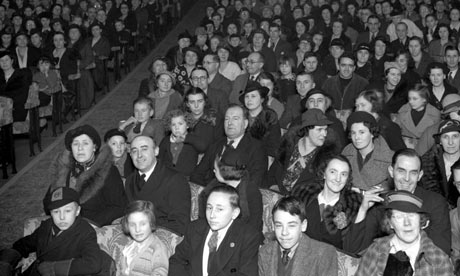
“All this amounts to the life of a man, these things he tells, his pride in saying them, his honest power.” So begins Jean Garrigue’s story, “Mr. Haszka,” in Vol. 5, No.2, from the spring of 1943– The Best Issue of the Decade, officially. It’s fitting that lines celebrating the power of narrative and honesty should permeate the issue, published in the thick of WWII and heavy with the weight of authors fighting their own battles with violences both physical and psychological.


In 1939 the Times Literary Supplement published an editorial titled “To the Poets of 1940,” claiming that “The beauty of the new [war] poetry will be in its integrity; it will be grave, positive and stark, because it is forced to look intently at the worst, but it will relate to the immediate, agonizing facts in universal terms.” The promise of that poetry, made in 1939, was delivered and then some in 1943. This is the issue of the War Poet.
In his poem “Jubilo,” Allen Tate asks “who will inflate the poets lung/ gone flat of this indignity?” and continues to exclaim that “the patient bares his arm at dawn/ To suck the blood’s tranfusing glow/ And then when all the blood is gone/ (For the Day of Jubilo)/ Salt serum stays his arteries/ Sly tide threading the ribs of sand/ Till his lost being dries and cries/ For that unspeakable salt land/ Beyond the Day of Jubilo.” The poems in this issue are filled with hurt and bloody honesty– the kind that comes from fear, and comes from necessity.
The issue continues on its rampage of gravity, positivity, and starkness, fulfilling every promise of the War Poet. In his essay “Pure and Impure Poetry,” Robert Penn Warren tells us that “There is only one way to conquer the monster: you must eat it, bones, blood, skin, pelt, and gristle. And even then the monster is not dead, for it lives in you, is assimilated into you, and you are different, and somewhat monstrous yourself, for having eaten it.” Meanwhile, in Ramon J. Sender’s play “The Key,” Virginia tells Fau that “You really hurt me– like a wolf, not like a man.” Fau tells Virginia that “I’ve hurt you because I like you.” Lines of love, pain, and confusion are not out of place in the home of the War Poet. They are, in fact, the wallpaper of that home.
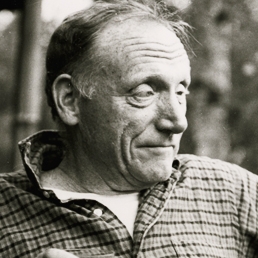


There is that promised positivity, though, to make the monsters worth wading through. Mark Van Doren says, in “How We Shine,” that “It does not matter, maybe, how we shine: /For deity, or lest Idea drowse; /Or if it must be, nothing. We do brighten / Bravely. Inward, outward, is the beam / Defined, and not a soul but has received it / Sweetly.” There is hope here, and magic. These are the poets climbing through the grime, but looking upward.

Well, there you have it, fair few readers– my vote for the Best KR Issue of the 1940’s. Keep a keen lookout for our upcoming picks from the 50‘s and 60‘s, to be followed by another round pitting the 80‘s, 90‘s, and newborn 00‘s against each other, to result in an ALL AROUND CHAMPION ISSUE. Yes, it’s exciting. Yes, I’m losing my cool.