

Read Part 1 here.
Looking back now, as August comes to a close, I’m struck by the peculiar strength and joy that came with both writing and engaging in conversation on form poetry. I had a very difficult summer. While dealing with an ongoing health issue and hearing horrifying stories from families and friends on the border, I also navigated some serious familial issues in which I found myself wanting to embody something as hard and strong and determined as a sestina— something that knew itself in its surrounding world so well, there could be no doubt about its fate, its future.
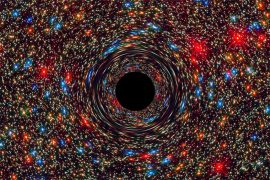
Often, I’ve felt like I am the very deep space around a delicate spaceship that holds the people I love.
That is, I’ve wanted to be their free verse, where my family can feel protected, unencumbered.
But in feeling powerless myself, in feeling lost and without answers over the course of the summer, I found in poetic forms a kind of recognizable structure to internalize and let guide me in making decisions that weighed not just on me but my family.
And through this, I found a new kind of kinship with structure itself.
There’s a trust that builds between poet and poetic form.
Especially if it’s a poet who wishes to “reframe the form,” meaning to challenge and experiment with new possibilities of what a form can be and what a form can do while still “keeping” a sestina a sestina, and a sonnet a sonnet.
Especially if it’s a poet who hears the possibilities of the outer-space-within-the-spaceship while outside, border walls and obstacles are being built upon groundless fear and rage.
There’s a trust, an implicit but consequential trust, when taking a poetic form and desiring to see yourself— your formerly very free verse self— within what you once believed were boundaries and restrictions. There’s a trust when you are the one to whom your family turns, and there is something that hits very deep in realizing that poetic forms are not about reinforcing borders at all, but dealing with the challenges that life presents you, and bearing witness to them in your language, your point of view, your music.
And you find in that trust of creating something new from something established, in reframing the form and making the hardest of choices, that inevitably something has to give.
Something has to give for you to survive and grow and above all, continue.
* * *
I ended up finishing that sestina about the horse I knew for less than a week in Iceland. It’s the first sestina I’d ever completed, and did not start out as something I wrote for the joy alone of writing, or something that I’d hope one day to publish.
It began as something very different.
As previously mentioned, there’s a distinct challenge inherent in writing a poetic form— especially if you’re a poet who seeks to reframe the form— and deciding which rules you’ll dare to bend and test, to see what might come of the experiment.
I wrote the sestina in variations of agony and ecstasy. There was no middle ground: when a line or end word worked, I felt I was piloting, successfully, the very deep space around the delicate spaceship; when I failed, well, it felt like plummeting through burning atmosphere of a strange planet, helplessly, via the most imprecise coordinates.
Failure— and there were many moments of this— taught me was a new kind of self-restraint.
And I really, really dislike that idea of restraint when it concerns poetry.
I really dislike it.
Even now when I see I’ve written self-restraint, a small part of me still believes this idea is the antithesis of poetry.
And I say this having discovered there is something incredibly freeing in self-restraint, in writing poetic forms like the sestina and the sonnet, in that I believe it makes your poetic brain work a different way.
If you’re someone like me who’s devoted herself to free verse, writing in poetic forms was finding a new kind of space. A deep, deep space that I know has always been there, a daunting and impenetrable space I once thought would only seek to torture and fatigue me. A place which, before I started reading contemporary form poetry, seemed not a place for someone who likes to get buck-wild and unleash on the page.
Yet when I dedicated myself to finishing the sestina, since the sestina llamas were still very much “active” in my brain, baring fang and the oval of their cria closing in on me, I found myself intrigued by the experiment, the adventure. Suddenly rules, by being visible, became subject to ponder and critique while also challenging me to shape and express my poem in this new sense of space.
A sense of space that might seem restrictive at first, but ended up making me feel like I was joining a particular chorus of other contemporary poets reframing the form. That I was part of something much larger, a special kinship in exhibiting just what a poetic form can be.
So it was less self-restraint and more a sense of poetic growth.
And with this sense, I turn to my newest manuscript that I have to turn in very soon to Alice James. Some area of brain that had needed to deal with organization and poetic-kind of “arcs” has awakened. It’s not about constructing a rigid sense of beginning, middle, end, but rather, wanting to guide the reader through something bigger than each of the poems alone, and to leave them with a feeling of ache and fullness, of hunger and satiety. What does it mean when all these poems speak to one another as they come together? What does it mean to have a collection speaking to other contemporary collections I’ve read and taught and loved?
And what does it mean to finally say aloud, I’ve felt helpless and now I know kinda what I’m doing, to my family, my poems, those willful llamas circling horse-would-be-sestina-me, not so much as a threat but as a reminder that they don’t want me, don’t want any of us, to give up on what we believe in most?
While writing poetic forms rewired my brain with a new sense of discipline and persistence, I also experienced joy. I began to ask and share with other poets in conversations, over email and on social media, what their favorite poetic forms, which ones they couldn’t stand, whose sonnets or villanelles excited them. I began a series of threads on the “true nature” of poetic forms: one on the villanelle, which exhibits what I believe to be cat-like behavior, cautious and agile in form, doesn’t care for any rules beyond her own, the embodiment of stubbornness. Later the sonnet, characterized as a swan, known for both grace and aggression (the latter which manifests when protecting her cygnets-couplet) as well as the duckbill platypus duality that is the prose poem. Characterizing these poetic forms as such helped me to explain just how each could manifest their very frustrating complexities in, of all things, humorous GIFs.
Even this act of sharing threads cleared my head, and had me thinking about why I love poetry: that only in poetry can I do and be the things I can’t do and be in real life.
That I can move in ways I can’t off the page.
And if free verse gave me the chance of exploring deep space, form poetry taught me how to structure those possibilities.
* * *
I haven’t written any more sestinas since the horse sestina. For now, it’s enough that I carried through on something that before I would have happily turned into a free verse poem. For now, it’s enough for me that I’ve stopped dividing the world of poetry into “free range” free verse poetry and “confining/confined” form poetry. For now, it’s enough to be the very inexact coordinates for my family, do the best I can, let others sometimes take over the motherboard. To see the good structure in prioritizing my health so that I can continue to be here on earth, loving them, every time we escape into deep space.
And it’s no small thing, over this summer, that I realized how young the life of poetry is. That surely at the same time it must pre-date language itself. That, on exoplanets far as they are near, lifeforms made out of sheer gamma rays hear us, see us for the days all we can do is fight hatred and intolerance and fear of otherness, these things that hold us back from evolving, and perhaps from our gamma-ray friends from reaching out, seeing as we are not ready yet, not ready to make contact with them as the kind of free verse poetic forms we could be.
And in case you’re wondering if the sestina llamas are still terrifying my thoughts…
Well, the answer is: of course, they are. They are sestina llamas. They don’t let up, although for now they are sated with the horse sestina I’ve written, and they aren’t so bad anyways, the sestina llamas, they know plenty about the kind of innovative structures we should be building, where trees simply pop up out of black sand shores, and dandelions lose themselves in a brief wind, beneath a second sun that becomes your horizon, and my horizon, a new kind of elsewhere, right at our fingertips.
This is the latest installment in an ongoing series exploring themes that haunt, bewilder and astound us. Read “On Time & The Consciousness of Poems” here, “On Language {Enunciation}” here and “On Sex, Exorcisms and Efes” here.