Read the winning piece of our 2025 Nonfiction Contest “Through the Mirror” by Jessie Cato selected by Lucy Ives.

Read

Information

Dates

June 21–27, 2026

(Welcome Hour on June 21 at 3:00 pm ET)

Tuition

$895

No application fee

Partial scholarships available

Application Information

Applications have closed for Summer 2026.

Questions? Concerns?

Please feel free to contact us at 740-427-5522 or email writersworkshops@kenyonreview.org.

Overview

Designed for writers who can’t take time off for a residential workshop, our online program offers a unique opportunity to learn from three different faculty members in one genre-specific, generative workshop, which will meet every day for one week in June.

Faculty

Creative Nonfiction

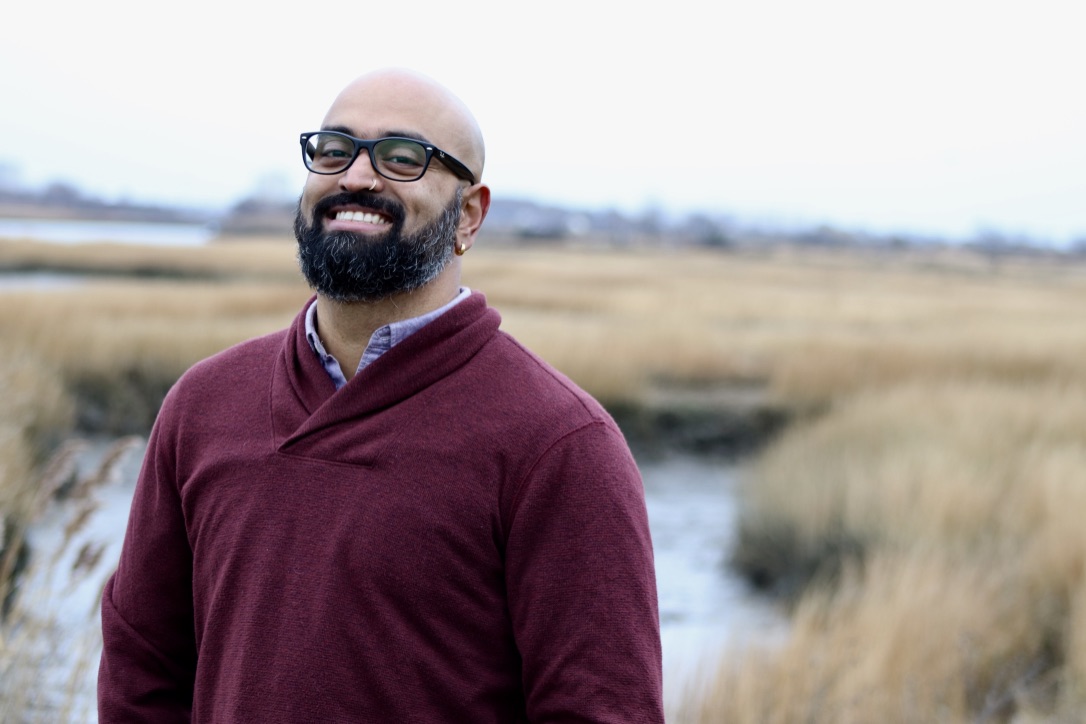
Rajiv Mohabir is an Indo-Caribbean American author of six acclaimed poetry collections, most recently, the forthcoming book Banbas/Exile; a book of translation, I Even Regret Night; and his hybrid memoir, Antiman. He is winner of the 2015 Kundiman Prize, a 2015 PEN/Heim Translation Fund Grant, finalists for the 2017 and 2022 Lambda Literary Awards, finalist for the 2022 PEN Open Book Award, the 2021 National Book Critics Circle Award for Poetry, and longlisted for the PEN/Voelcker Award in Poetry. Mohabir has received fellowships from Voices of Our Nationʻs Artist foundation, Kundiman, The Home School, and the American Institute of Indian Studies language program. He received his MFA in Poetry and Translation from Queens College, CUNY, and his PhD in English from the University of Hawai`i. Rajiv is currently a professor at the University of Colorado-Boulder.

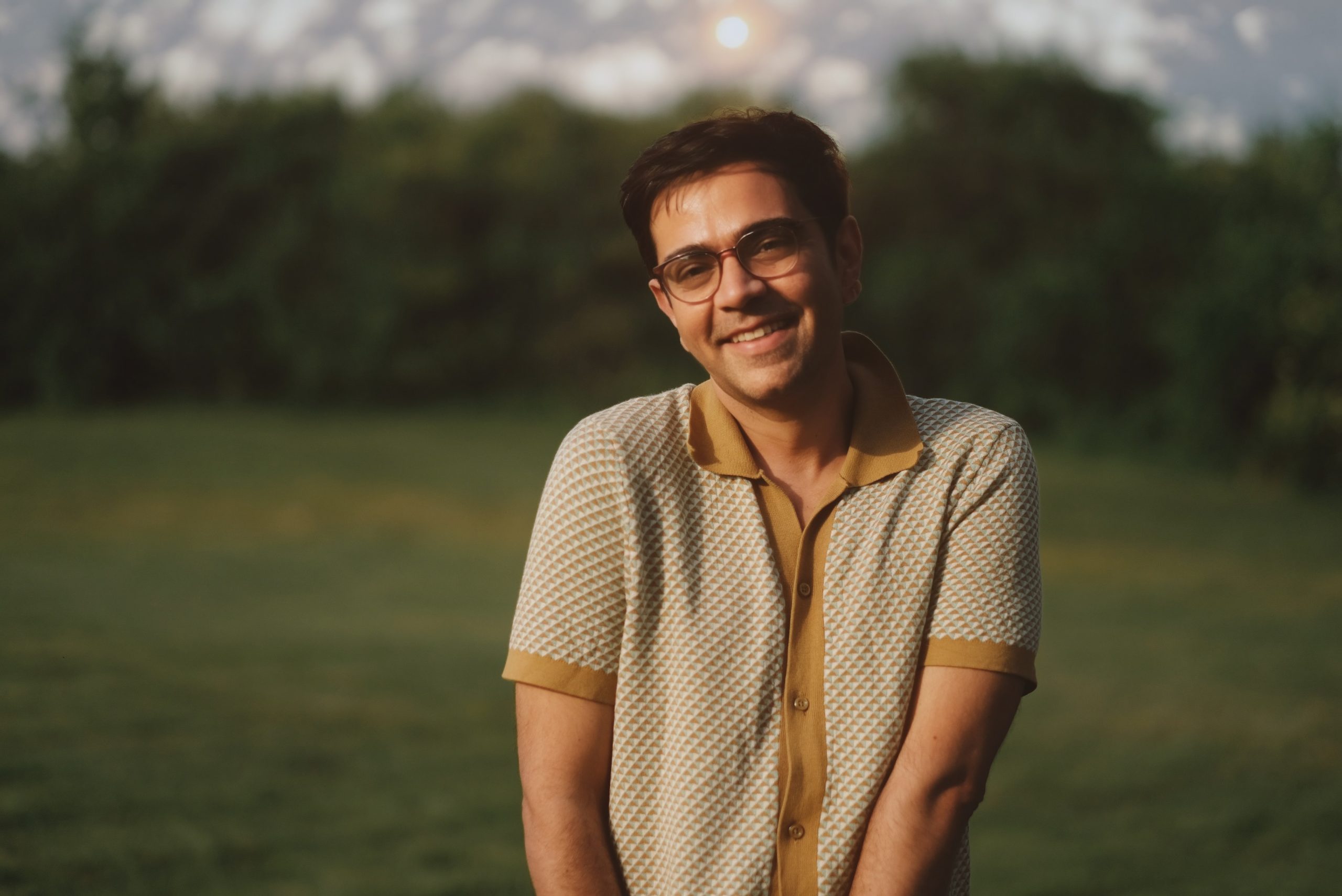
Nita Noveno is the recipient of the 2024 Women’s Prose Prize from Red Hen Press for her hybrid memoir Mud on the Moon, forthcoming in August 2026. A graduate of the MFA Creative Writing Program at The New School, her creative nonfiction and hybrid work has appeared in MĀNOAIdentity TheoryBrinkHippocampusThe Seventh Wave, the Asian American Writers’ Workshop’s Open City and The Margins, among other publications. She teaches creative nonfiction, composition, and literature at the Borough of Manhattan Community College, City University of New York, and is the founder and host emeritus of Sunday Salon, a long-running reading series in New York City. The child of immigrant parents from the Philippines, she grew up in the temperate rainforest of Southeast Alaska and now lives in Queens, NY.

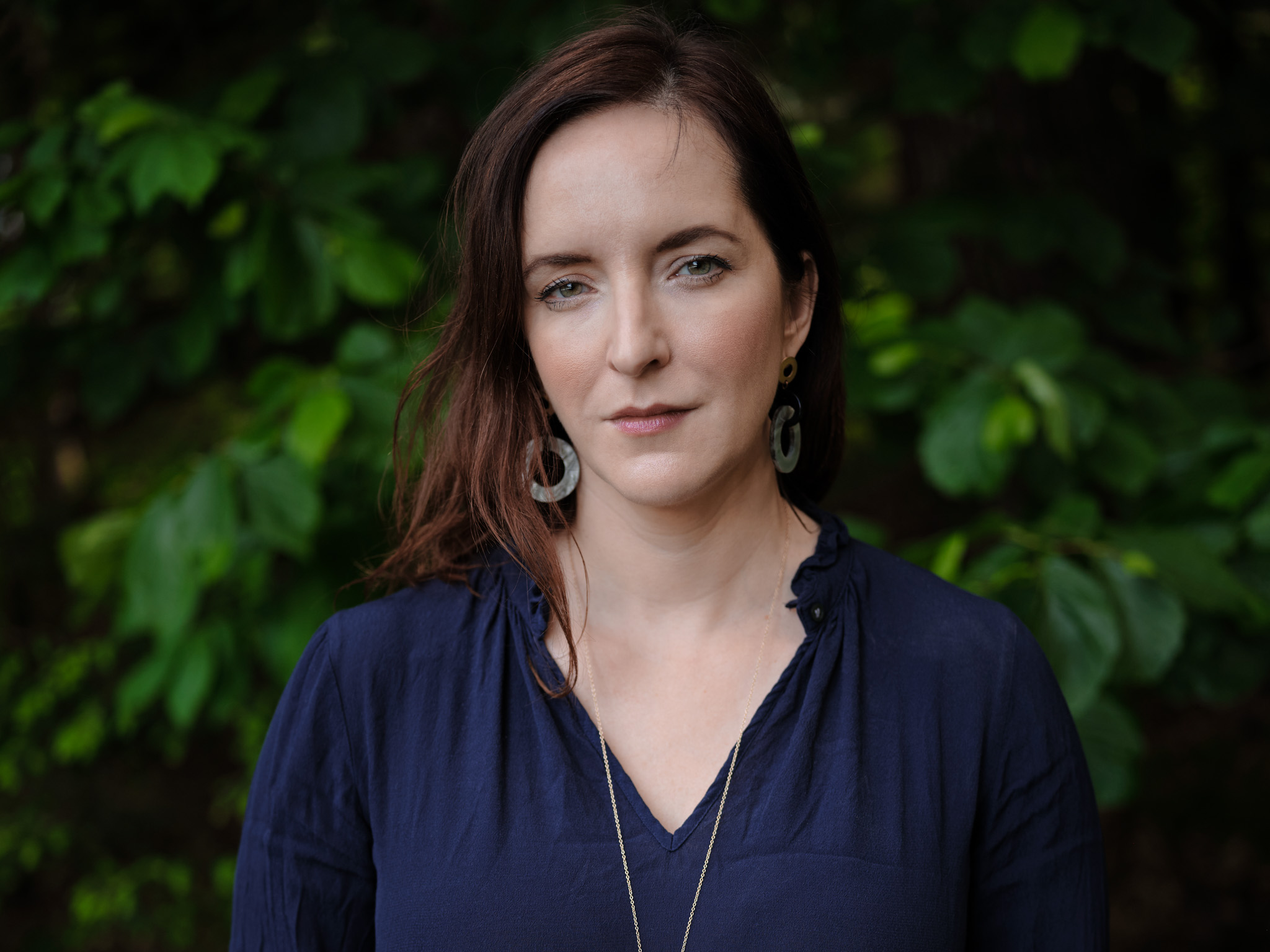
Alysia Li Ying Sawchyn teaches in the Creative Writing Program at Bucknell University. Formerly the editor in chief of The Rumpus, she has received fellowships from The Kenyon Review and the Sewanee Writers’ Conference. Their first essay collection, A Fish Growing Lungs, was a finalist for The Believer Book Awards.

Fiction

Shastri Akella’s second book, A Queer Shade of Saffron (HarperCollins India 2026) is a story collection that includes works of literary fantasy (“The Magic Bangle”, selected for the 2024 Best American Short Fiction) and literary horror (“The Border Ghosts”, winner of the 2025 Desperate Literature Short Fiction contest). His debut novel, The Sea Elephants (Flatiron Books USA, Penguin India 2023), was named a most anticipated debut by LGBTQ Reads, Good Morning America, and others. He was a finalist for the 2025 Galley Beggar Press Short Story Prize and the 2024 William Faulkner Short Story Award. His fiction is available in Black Warrior Review, Guernica, Fairy Tale Review, The Massachusetts Review, and elsewhere, and his creative non-fiction in World Literature Today, LitHub, and Coonor & Co, amongst others. He is presently finishing his third book, Stag of the Seven Antlers, a literary fantasy novel rooted in Irish mythology.

Yohanca Delgado was a 2021-2023 Wallace Stegner fellow at Stanford University and a 2022 National Endowment for the Arts fellow. Her fiction appears in The Best American Short Stories 2022, The O. Henry Prize Stories 2022The Best American Science Fiction and Fantasy 2021, The Paris Review, One Story, A Public Space, McSweeney’s, and elsewhere. She is a co-writer of Janelle Monae’s New York Times bestseller, The Memory Librarian. Her essays appear in TIME, The Believer, and New York Times Magazine. She holds an MFA in Creative Writing from American University and is a graduate of the 2019 Clarion workshop.

Libby Flores‘ writing has appeared in One StoryThe Kenyon ReviewGagosian QuarterlyAmerican Short FictionPloughsharesMcSweeney’sTin House, and The Los Angeles Review of Books. She has taught creative writing workshops for the Sackett Writing Workshop, Tin HouseOne Story, Hub City Writers Project, Bennington College, and PEN America. She is the former Director of Literary Programs at PEN and the former Associate Publisher at BOMB Magazine. In 2024, she was a visiting faculty member at Bennington College, where she guest edited The Bennington Review. She is represented by Sarah Bowlin at Aevitas Creative Management. Libby lives in Brooklyn, but will always be a Tex-Mexican. Her book All Good Men is forthcoming from Unnamed Press in 2027. Find her at libbyflores.com.

Robert Lopez is the author of eight books, the most recent of which are The Best People and Dispatches From Puerto Nowhere. His fiction and essays have appeared in dozens of journals and anthologies, including BOMB, Vice, The Sun, Fence, The Threepenny Review, and two Norton anthologies of flash fiction. He teaches at Stony Brook University and has previously taught at The New School, Pratt Institute, Columbia University, and Syracuse University. Part of the World, his first novel, will be republished by Dzanc Books in fall 2026 as a special 20th anniversary revised and updated edition.

Rebecca Makkai is the author of the New York Times bestselling I Have Some Questions For You as well as four other works of fiction. Her last novel, The Great Believers, one of the New York Times’ Best Books of the 21st Century, was a finalist for both the 2019 Pulitzer Prize and the 2018 National Book Award, and was the winner of the ALA Carnegie Medal and the LA Times Book Prize among other honors. A 2022 Guggenheim Fellow, Rebecca teaches graduate fiction writing at Middlebury College, Northwestern University, and the Bennington Writing Seminars, and she is Artistic Director of StoryStudio Chicago.

Avigayl Sharp is the author of the novel Offseason (Astra House), published in May 2026, and the story collection Sickness, Health, forthcoming in 2027. Her fiction has appeared in The Paris ReviewGrantaMcSweeney’s, and elsewhere. Originally from Chicago, she lives in Brooklyn.

Poetry

Benjamin Garcia is a 2023 National Endowment for the Arts Fellow in poetry. His first collection, THROWN IN THE THROAT, was selected for the National Poetry Series and the Eugene Paul Nassar Poetry Prize, and was a finalist for the Kate Tufts Discovery Award. He worked for ten years as a sexual health and harm reduction educator in New York’s Finger Lakes region, where he received the Jill Gonzalez Health Educator Award recognizing contributions to HIV treatment and prevention. A CantoMundo and Lambda Literary fellow, he serves as core faculty at Alma College’s low-residency MFA program. His poems and essays have appeared or are forthcoming in: AGNI, the American Poetry Review, Indiana Review, The Kenyon Review, and New England Review.

He is currently at work on a multimedia project exploring autism and ADHD. His video poem “Ode to the Peacock” is available for viewing at the Broad Museum’s website as part of El Poder de la Poesia: Latinx Voices in Response to HIV/ AIDS.

Amanda Gunn is the author of Things I Didn’t Do with This Body (Copper Canyon Press). Raised in Connecticut, she worked as a medical copyeditor for 13 years before earning an MFA in poetry from the Johns Hopkins Writing Seminars. She is the recipient of the Missouri Review Editor’s Prize, the Auburn Witness Poetry Prize, and a Pushcart Prize, and has received fellowships from the Wallace Stegner Program at Stanford, the Civitella Ranieri Foundation, the Rona Jaffe Foundation, MacDowell, the Bread Loaf Writers’ Conference, and the Kenyon Review Writers Workshop. She is a PhD candidate in English at Harvard; her dissertation project examines formal experimentation, aesthetic disruption, and political consciousness in the work of Gwendolyn Brooks.

Lisa Low is the author of Crown for the Girl Inside (2023), winner of the Vinyl 45 Chapbook Contest from YesYes Books. Her poems have appeared in American Poetry Review, Ecotone, The Massachusetts Review, Poetry, The Southern Review, and elsewhere, and her essay “How to Apologize” won the 2020 Gulf Coast Nonfiction Prize. She is the recipient of a 2023 Pushcart Prize and has an MFA from Indiana University and a PhD from the University of Cincinnati, where she served as associate editor at The Cincinnati Review. Her debut full-length poetry collection Replica is forthcoming from the University of Wisconsin Press in 2026. Originally from Maryland, she lives in Chicago.

Jesse Nathan was raised in northern California and rural Kansas. His first book of poems, Eggtooth, was published by Unbound Edition Press in 2023. The collection won the 2024 New Writers Award in Poetry. It also won the 2024 Housatonic Book Award and the 2025 Kansas Book Award. The book was also a finalist for the Golden Poppy Award, the Northern California Book Award, the Medal Provocateur/Eric Hoffer Award, and the Nossrat Yassini Poetry Prize. 
 
Nathan’s poetry has appeared in the New York Review of Books, the Paris Review, Poetry, the American Poetry Review, The Kenyon Review, BOMB, The Nation, The Believer, Zyzzyva, and the inaugural issue of Revel, among other magazines. His work has been supported by fellowships from the Andrew W. Mellon Foundation, Stanford University, the Arts Research Center at UC Berkeley, Bread Loaf, the Community of Writers, the Ashbery Home School, and the Kansas Arts Commission. He was a 2024 LABA Bay Area Fellow, and the 2024 Robert Frost Fellow in Poetry at Bread Loaf.
  
Nathan’s translations from the Popol Vuh have appeared in Poetry, and he’s made translations of Alfonsina Storni and Brenda Solís-Fong, and these have appeared in Mantis and Poetry International. Nathan was a founding editor of the McSweeney’s Poetry Series. He contributes occasional prose to the New York Times. With Ilya Kaminsky and Dominic Luxford, he edited In the Shape of a Human Body I Am Visiting on Earth: Poems from Far and Wide. Nathan’s reviews and interviews appear in the series “Short Conversations with Poets,” published online by McSweeney’s.

He’s taught poetry in the Kenyon Review Online Workshops, at Bread Loaf, and online at the 92Y. Nathan teaches in the English Department at UC Berkeley.

Photo of Brad Richard

Brad Richard’s most recent full-length collection is Parasite Kingdom (The Word Works, 2018— winner of the Tenth Gate Prize). His most recent chapbook is In Place, winner of the 2021 Robin Becker Series Prize from Seven Kitchens Press. He has taught creative writing at the New Orleans Center for Creative Arts, The Willow School (whose creative writing program he founded and directed), Louisiana State University, and Tulane University, and for New Orleans Writers Workshop. Series editor of the Hilary Tham Capital Collection from The Word Works, he lives, writes, and gardens in New Orleans.

EMILY JUNGMIN YOON is a poet, translator, editor, and scholar. She is the author of the full-length poetry collections Find Me as the Creature I Am (Knopf, 2024) and A Cruelty Special to Our Species  (Ecco | HarperCollins, 2018), winner of the 2019 Devil’s Kitchen Reading Award and finalist for the 2020 Kate Tufts Discovery Award. The book was released in Korean as 우리 종족의 특별한 잔인함 (trans. Han Yujoo, Yolimwon 2020). She is also the author of Ordinary Misfortunes, the 2017 winner of the Sunken Garden Chapbook Prize by Tupelo Press (selected by Maggie Smith), and the translator and editor of Against Healing: Nine Korean Poets (Tilted Axis, 2019), a chapbook anthology of poems by Korean women writers. Yoon is currently working on a critical manuscript, Enclosed Reading: A Feminist Method for Contemporary Korean and Korean American Women’s Poetry, 1987-2019.

Yoon has accepted awards and fellowships from the Poetry Foundation, Bread Loaf Writers’ Conference, Ploughshares, and elsewhere. Individual works have appeared in The New YorkerPOETRYThe New York Times MagazineThe Paris ReviewThe Sewanee Review, and elsewhere. 

She currently serves as the Poetry Editor for The Margins, the literary magazine of the Asian American Writers’ Workshop, and was the 2022-2023 Abigail Rebecca Cohen Postdoctoral Scholar at the University of Chicago. She is an Assistant Professor of Korean literature in the Department of East Asian Languages & Literatures at the University of Hawaiʻi at Mānoa.

Yoon splits her time between Honolulu and South Korea.

FAQ

Workshop Overview

How is the workshop structured?

The week begins on Sunday, June 21st, with an opening welcome hour at 3:00 p.m. ET wherein you meet your workshop group and faculty members. Beginning Monday, June 22nd, participants attend workshops from 1:00 p.m. to 4:00 p.m. ET each day. Workshops will involve discussion of assigned reading, sharing individual writing, workshopping each other’s writing, and writing in response to prompts.

How many people are in each workshop?

Each class is limited to 12 participants.

Will I have a chance to write much during the week?

Yes. You will write a lot, and you will write daily. The Kenyon Review Online Writers Workshops are unique in that they are generative in nature. This is a week to create new work. By the time the week is over, participants have a number of new pieces on their way to completion and leave the workshop with a clearer, more self-directed sense of what they need and want to continue working on in their writing.

Who teaches the workshops?

Our faculty are talented writers and teachers from around the country. Many of our faculty members have been published in The Kenyon Review. Our instructors have advanced degrees in creative writing, have a lot of experience in the world of publishing, and most teach creative writing at universities during the academic year. They are a strong team with a deep understanding of the curriculum and philosophy of the Kenyon Review Writers Workshops.

What kind of writers enroll in the Kenyon Review Online Writers Workshops?

Our participants are a diverse group, representing a wide range of academic and personal interests. Some are experienced writers who are hoping to expand their range and take some risks. Others relatively new to writing might be seeking an opportunity to receive feedback and instruction on craft. Overall, the participant who will benefit most from the workshop is one who likes to work with other people and who isn’t looking for a traditional approach to writing and learning. If you’re open to experimentation, willing to be playful and take some risks as a learner, and more interested in the writing process than in final goals, then you will thrive in the Kenyon Review Writers Workshops.

Application Process

Who can apply for the Kenyon Review Online Writers Workshops?

Anyone 18 years of age or older is eligible to apply.

I’m not a U.S. Citizen. Can I still apply?

Yes. We welcome international applications.

When can I apply?

Applications open on March 9, 2026. Kenyon Review programs are selective, and all applications are reviewed by committee. We will make every attempt to let applicants know our admission decision by mid-May.

How do I apply?

You will need to create a free Submittable account in order to apply, which you can do on our application page. If you already have a Submittable account, please sign in using your existing account. Be sure to add submittable.com to your address book and/or check your spam folders for email confirmations and notifications that we will send via Submittable.

To complete the online application, you must submit an online application form and a writing sample that showcases your best writing. If you are signing up for the poetry workshop, submit 3 to 4 poems. If you are signing up for the fiction or creative nonfiction workshop, we request between 5-20 pages of prose writing.

How do I know that you received my application?

Once you have submitted your application, you will receive an email notification at the address you entered when you signed up for a Submittable account. Be sure to whitelist submittable.com or check your spam folder to ensure that you receive notifications from Submittable. You can also log back in to your Submittable account to check the status of your application at any time. If you have any problems or questions, please contact us at writersworkshops@kenyonreview.org, or 740-427-5522.

How are applicants chosen for the Kenyon Review Writers Workshops?

In evaluating applications, the selection committee pays particular attention to the writing sample. We are looking for participants who show real talent and passion for writing as well as participants who will thrive in the workshop. We strive to admit a diverse group of people with a wide range of writing styles and personal interests. We are selective in our acceptance, but if you are not accepted this year, we encourage you to reapply.

If I am put on the waitlist, when will I find out whether a spot has opened up?

We seek to contact waitlisted applicants no later than May 30th. However, we may also contact waitlisted applicants in June if spots open up last minute.

If I am not accepted, can I apply again?

Absolutely. We encourage this.

Cost and Payment Schedule

How much is tuition?

Tuition for the Kenyon Review Online Writers Workshops is $895.00 including access to all reading materials online.  If you are accepted, you’ll receive a link to an enrollment form which should be completed and returned along with full payment by June 1, 2026. If you don’t submit payment by June 1, you forfeit your space.

How do I pay?

You may pay your non-refundable deposit and balance at our online store. We prefer online payments, but you may also pay by check (payable to “Kenyon Review” and mailed to Kenyon Review Writers Workshop, 102 W. Wiggin St. Gambier, OH 43022) or by calling 740-427-5208.

What is the cancellation policy?

If you cancel your enrollment June 2 – June 9, 2026, we will keep a $250 cancellation fee, but return the remaining balance paid. There will be no refund of tuition on or after June 10, 2026.

Technology

Will there be technical support for using Zoom for the workshop week?

Yes, there will be an optional tech check-in before the program begins. The Kenyon Review will also provide technical support from student interns to help writers log into the workshop.

In what time zone will program events be happening?

All workshop schedules are listed in Eastern Daylight Time.