
Read the winning piece of our 2025 Nonfiction Contest “Through the Mirror” by Jessie Cato selected by Lucy Ives.

Read

Jan/Feb 2020 • Vol. XLII No. 1 • Nonfiction |

The Last Soviet Poet

Twenty years ago, I was lost again in Moscow, circling identical white multistory apartment blocks in a panic, trying to find the legendary avant-garde poet Dmitri Aleksandrovich Prigov. I was always lost in Moscow. Whether confronted by churches or apartment complexes, I found Russia’s architecture dizzying in its self-replication. In the 1976 film The Irony of Fate, Zhenya gets so drunk with his friends at a Moscow banya that when they haul themselves off to the airport, he passes out at the gate. His buddies are so drunk that they cannot recall who is to go on the plane to Leningrad, and they guess (incorrectly) that it’s Zhenya. Because every happy Soviet city resembles every other, Zhenya staggers from the plane, through an identical airport to a taxi, gives his address to the driver, and is taken to an identical apartment, where he staggers up and inserts his key into the identical door — and it opens. Thus begins his adventure in a parallel life.

Like Zhenya, I lurched around white Russian hives, their identical balconies and entryways. The only difference between each building was the small number affixed to its side, visible only upon approach — like quintuplets, they each had some small birthmark that enabled you to tell them apart.
Already have an account? Log in

Join KR for even more to read.

Sign up for a free account and read any five pieces a month.
Sign Up and Read for Free


Or become a subscriber today and get complete, immediate access to our digital archives at every subscription level.
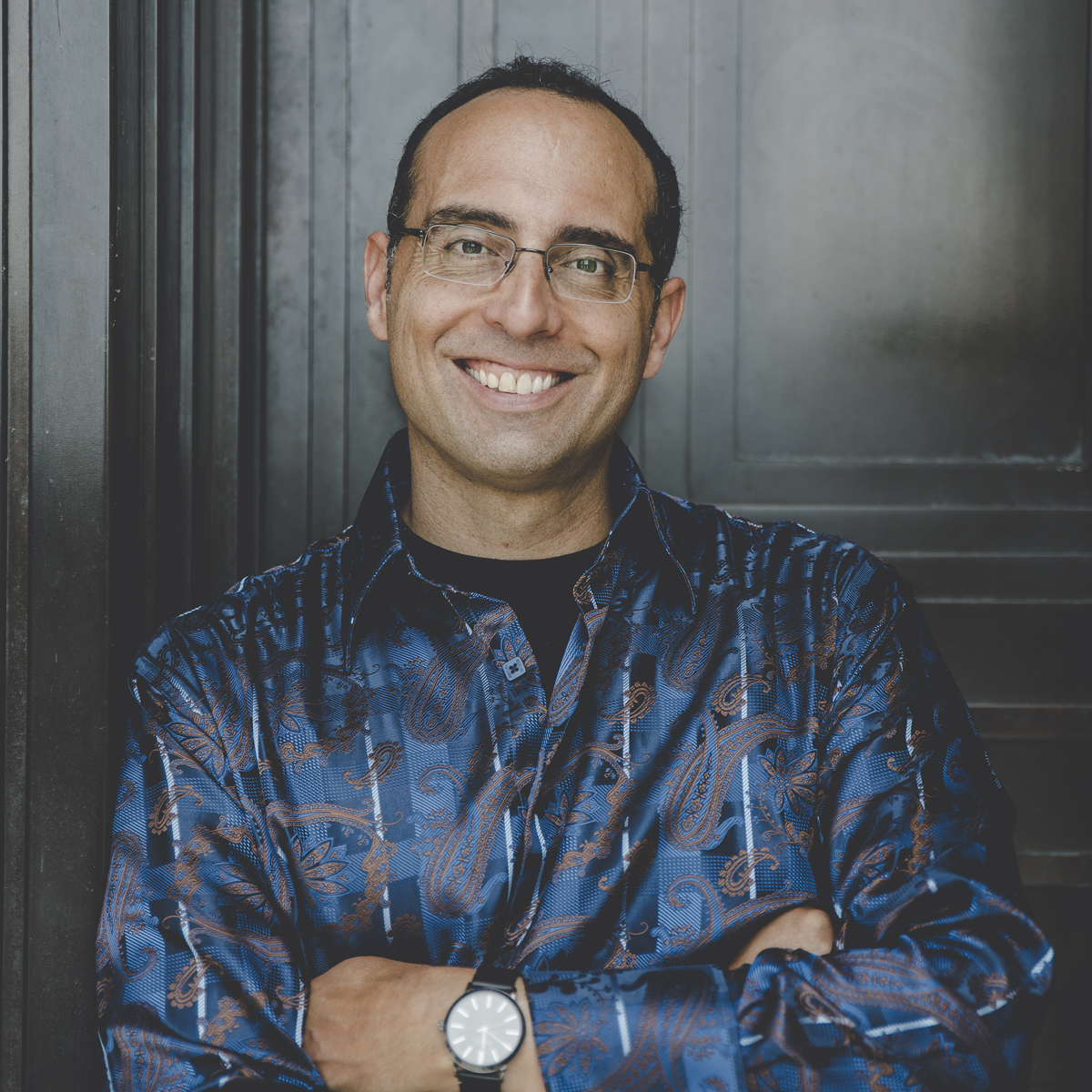
Photo of Philip Metres

Philip Metres has written twelve books, including Fugitive/Refuge (Copper Canyon Press, 2024), Shrapnel Maps (Copper Canyon Press, 2020) and Sand Opera (Alice James Books, 2015). Winner of Guggenheim and Lannan fellowships and three Arab American Book Awards, he is professor of English and director of the Peace, Justice, and Human Rights Program at John Carroll University. He believes a just peace for Palestine and Israel is possible and requires our participation.

Read More

The Peace Walls

By Philip Metres

On a street where Protestants and Catholics once torched each other’s houses a generation ago, Noel and Danny — men who fought on opposite sides of the bloody Troubles — look each other straight […]

Upcoming
Workshops

Subscribe

Your free registration with The Kenyon Review includes access to exclusive content, early access to program registration, and more.

Donate

With your support, we’ll continue 
to cultivate talent and publish extraordinary literature from diverse voices around the world.