
Read the winning piece of our 2025 Nonfiction Contest “Through the Mirror” by Jessie Cato selected by Lucy Ives.

Read
Summer 2025 • Vol. XLVII No. 3 • Forough Farrokhzad Folio |

Postcolonial Novel

Hijacking Richie Hofmann’s “French Novel”

You were my second intifada,
You had dark eyes and hair
Like the painting of an Arab.
We lay on our stomachs, digging tunnels in our homeland.
I emailed my professor. I will be absent from your useless
Postcolonial Novel class due to
actually resisting. You put on
Songs of revolution. Even though
It was winter, we had to keep
The shovel digging day and night, the air so hot and damp
It made our colonizers bleed.
With boots, they trekked through our corpses for a bottle of red wine
They weren’t allowed to call blood, their selfies unhinged
Against their machine gun poses.
The Arabic language distinguishes
Between the dual,
The plural, the thin veil between the many and
The singular. Of course,
We’d have other intifadas. Of course,
The intifada will still be one. Ash fell on our hair.
You were my second intifada.
Another way of saying this:
You were the end of a world
Not the end of the world.

Already have an account? Log in

Join KR for even more to read.

Sign up for a free account and read any five pieces a month.
Sign Up and Read for Free


Or become a subscriber today and get complete, immediate access to our digital archives at every subscription level.
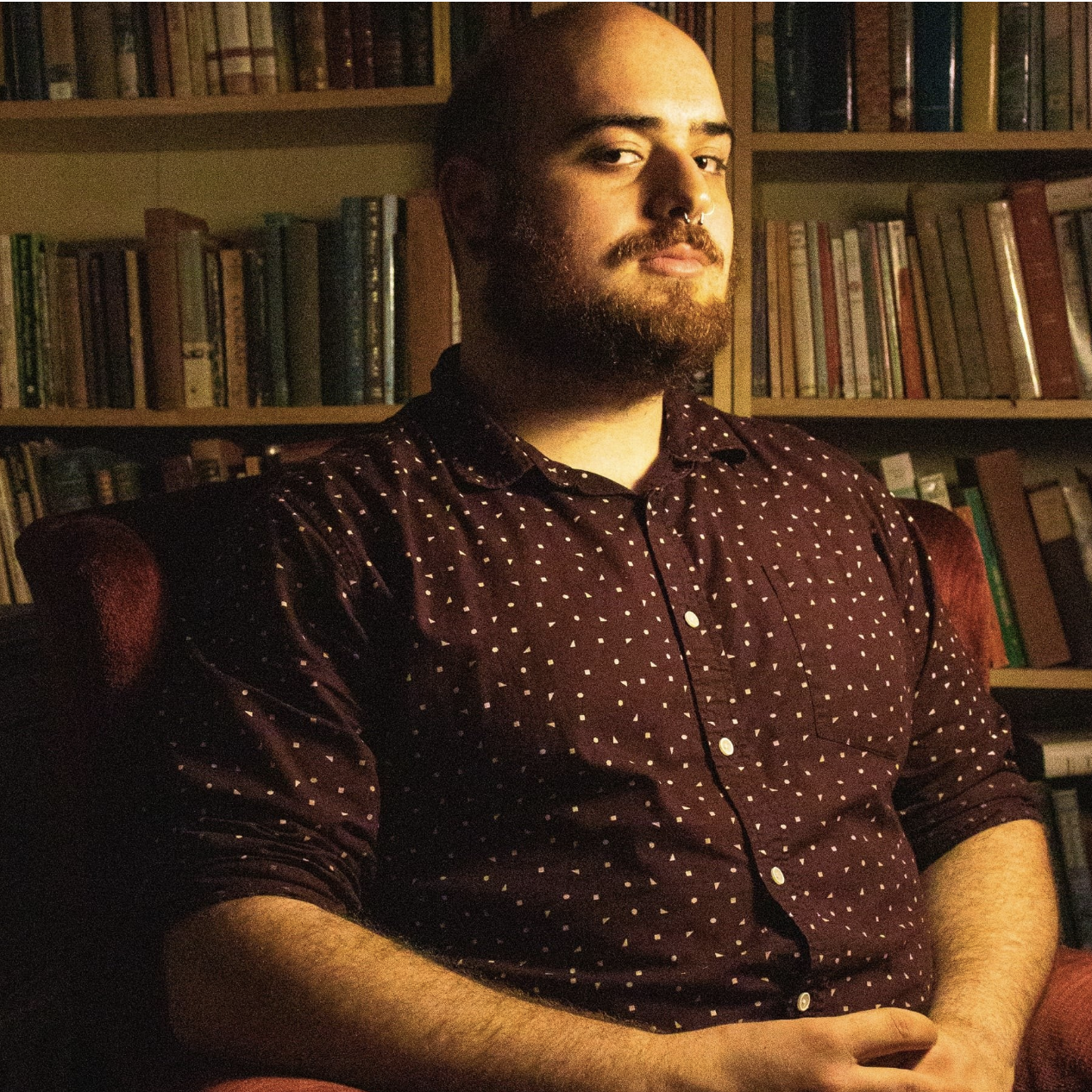
Photo of George Abraham

George Abraham (they/ هو ) is a Palestinian American poet, essayist, critic, and performance artist. Their debut poetry collection, Birthright (Button Poetry, 2020) won the Arab American Book Award and was a Lambda Literary Award finalist. They are the executive editor of Mizna and coeditor of HEAVEN LOOKS LIKE US: Palestinian Poetry (Haymarket Books, 2025). They are a graduate of Northwestern’s Litowitz MFA+MA program and teach at Amherst College as a writer-in-residence.

Read More

My Eve of No Nation

By George Abraham

Hijacking Philip Metres's "My Heart Like a Nation" Of course you have set my verse on fire. — Forough Farrokhzad, translated by Elizabeth T. GrayYou who cannot throw off exile,who, […]

Subscribe

Your free registration with The Kenyon Review includes access to exclusive content, early access to program registration, and more.

Donate

With your support, we’ll continue 
to cultivate talent and publish extraordinary literature from diverse voices around the world.